
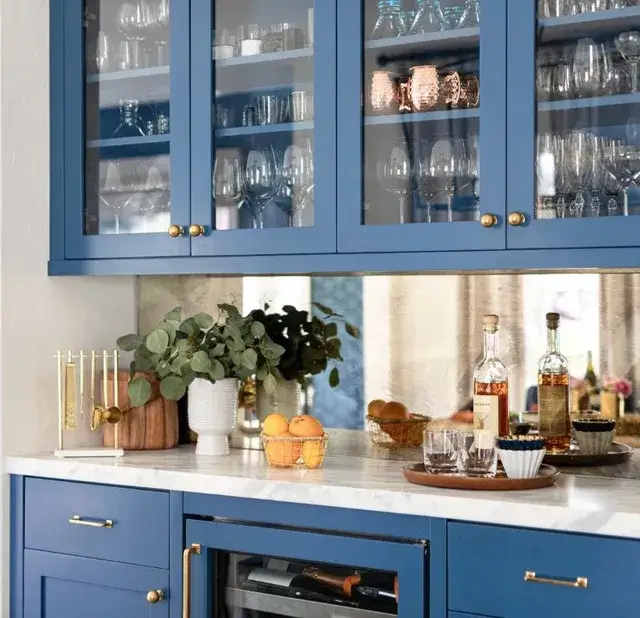
Every kitchen starts with cabinetry-not just for storage, but as the foundation of its visual and structural identity. With our professional kitchen cabinet installation service in Encinitas, CA, precision is at the heart of everything we do. When cabinetry is fitted with exact alignment and expert craftsmanship, your entire kitchen feels balanced, solid, and built to last.
GET IN TOUCH
💬 Connect with a remodel expert in seconds!
Understanding Cabinet Types and Styles
Homeowners across Encinitas, CA tend to blend modern coastal aesthetics with practicality – a mix of light colors, natural textures, and efficient layouts. The type of cabinet selected determines not just the look but the long-term durability of the kitchen.
- Custom Cabinets: Built to fit exact dimensions, ideal for homes with unique layouts or when homeowners want to maximize every inch of space. They allow flexibility in materials and finishes, especially valuable in older homes where walls and corners are rarely perfectly square.
- Semi-Custom Cabinets: provide an ideal middle ground—offering homeowners the flexibility to personalize design details while keeping expenses within a manageable budget. They provide a range of modifications while keeping production timelines predictable – a frequent choice for clients updating mid-size kitchens.
- Stock Cabinets: Pre-manufactured in standard sizes and finishes, suitable for quick remodels or rental properties where turnaround time matters more than full customization.
Every cabinet style demands its own specific installation method, with subtle variations tailored to its construction and design. For example, older coastal homes often have irregular wall planes due to settling or humidity, adjusting shims and anchor points becomes crucial to maintain alignment over time.

Encinitas Kitchen Cabinet Installation Service Process: A Step-by-Step Overview
Years of on-site experience have taught that precision during kitchen cabinet installation determines the outcome more than any single product choice. A well-planned sequence prevents small missteps from compounding into larger issues later.
1. Site Preparation and Measurement
Before any cabinet arrives, the room is inspected for wall plumb, floor level, and moisture exposure. Even a quarter-inch slope across a ten-foot wall can throw off alignment. The subfloor and wall framing are corrected if required to ensure a stable and even base.
2. Layout Marking and Reference Lines
The process begins with establishing level and plumb reference lines – not by eye, but with laser levels. These lines guide all base and wall cabinet placements, ensuring consistent spacing and vertical alignment throughout the kitchen design.
3. Base Cabinet Installation
The Installation starts from the most stable corner, anchoring each cabinet securely into studs. Shims are adjusted to correct floor variations. Drawers and doors are left off until final alignment to prevent warping during fastening.
4. Wall Cabinets and Hardware Fitting
Upper cabinets are hung next, secured into solid blocking or studs – not just drywall. This prevents sagging, especially for heavier hardwood units. Hardware alignment follows, ensuring uniform gaps and smooth operation.
5. Finishing and Inspection
The final stage involves checking reveals, adjusting hinges, and sealing joints. All visible fasteners are concealed and protective coatings are applied to resist moisture and salt air – important for coastal climates like Encinitas.
Common Cabinets Installation Mistakes
(How to Avoid Them)
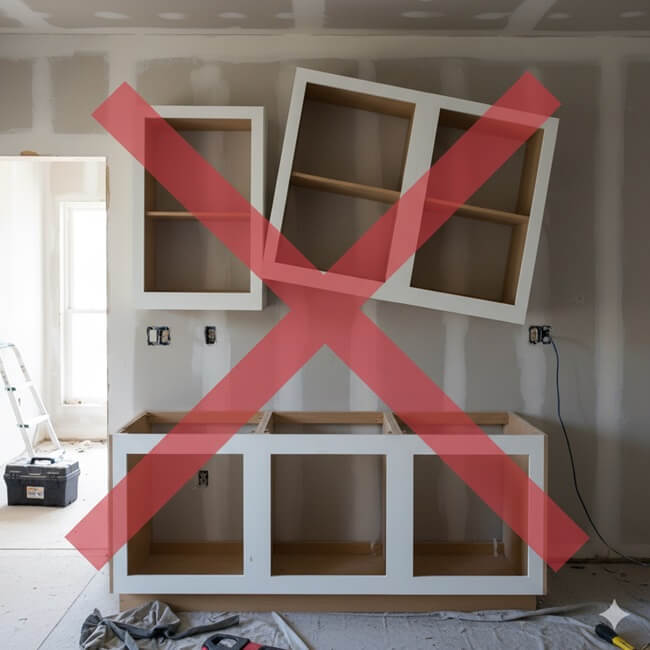
Over the years, homeowners have shared stories of previous installations gone wrong – cabinet faces misaligned, gaps between walls, or drawers that scrape when opened. These issues often trace back to the same preventable mistakes:
Failing to level or check for out-of-square corners before installation causes visible gaps later.
Avoided by pre-fitting mock lines and adjusting for variances early.
Using short screws or missing studs leads to eventual loosening.
Avoided by anchoring through structural framing, not drywall, and confirming every connection.
Cabinets near cook tops require heat-resistant spacing and ventilation.
Avoided by planning clearances based on appliance specifications.
Applying trim or filler panels without full alignment review creates uneven seams.
Avoided by performing a full dry fit before final attachment.
Attention to these details may sound meticulous, but precision at this stage eliminates future maintenance calls and ensures that every line in the kitchen feels intentional.
Professional Cabinets Installation vs. DIY
DIY installation often seems appealing at first glance, especially when watching simplified tutorials online. However, the difference between a decent result and a truly seamless installation lies in millimeters.
Misaligned rails or slightly uneven bases might not be visible immediately – but after a few months, doors drift, drawers stick, and countertops don’t sit flush.
On the other side, A professional installation service accounts for these tolerances. In Encinitas homes, wall variations, humidity, and differing subfloor installation materials make experience indispensable. Skilled remodelers use specialized leveling tools, reinforced fasteners, and durable sealants chosen for coastal conditions.
Over years, that attention to detail has consistently reduced post-installation service calls and extended cabinet life expectancy.
Cabinet Cost Factors and Budget Planning
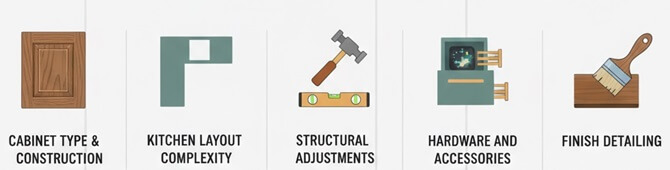
Cost transparency builds trust early in any project. Cabinet installation pricing depends on several real factors – not vague estimates.
- Cabinet Type & Construction: Custom hardwood cabinets require more labor precision than laminate or MDF.
- Kitchen Layout Complexity: L-shaped – galley kitchens with tight corners involve more cutting and fitting time.
- Structural Adjustments: Leveling uneven floors or reinforcing old walls adds to labor but ensures long-term stability.
- Hardware and Accessories: Motion-controlled hinges, sliding organizers and integrated lighting require additional fitting steps.
- Finish Detailing: Painting, staining or matching pre-finished trims to existing decor influences both time and cost.
Before starting, homeowners are encouraged to define a clear investment range, in order to reflect this budget on the cost factors. This ensures that material selections and layout decisions align with expectations, reducing mid-project changes and helping maintain both schedule and quality.
Storage Efficiency and Design Considerations
Good design extends beyond what’s visible. Storage efficiency – how drawers open, how shelves adjust, and how traffic flows – defines the experience of using a kitchen daily.
As part of many remodeling discussions, homeowners frequently request:
- Deep Drawers: for cookware and pantry goods.
- Vertical Dividers: designed to neatly organize bakeware, lids, and serving platters.
- Corner Pull-outs: to eliminate wasted space.
- Hidden Charging Stations: or built-in power outlets behind cabinet panels.
These upgrades aren’t just about convenience, they respond to how families actually live. A household that cooks daily has different storage needs than one focused on entertaining. Understanding those nuances – after engaged in multiple projects – helps tailor each layout to real use, not showroom display.
Maintenance and Longevity Tips

Once installed, cabinetry maintenance becomes straightforward if a few habits are followed:
- Regular Cleaning: Use non-abrasive cleaners to preserve finish integrity, especially near salt-air windows.
- Hinge Adjustment: Minor seasonal shifts can be corrected by adjusting screws rather than forcing doors.
- Moisture Control: Keep under-sink areas ventilated, in coastal humidity can affect wood movement.
- Hardware Care: Occasionally tighten handles and knobs to prevent wear from vibration and frequent use.
Proper care ensures cabinetry remains aligned, smooth, and visually sharp for years beyond installation.
Real-World Insight:
What Homeowners Often Overlook
From working on diverse projects across North County, certain homeowner assumptions come up repeatedly:
- Thinking all walls are level: In many homes built before the 1990s, walls and floors have settled – expecting “perfect square” spaces without adjustment is unrealistic.
- Underestimating delivery lead times: Custom cabinets can take 6 -10 weeks, planning installation ahead avoids downtime.
- Forgetting about appliance coordination: Dishwashers, ovens, and fridges need precise spacing – a common oversight that forces costly changes later.
Recognizing these early helps avoid frustration and unexpected costs. An experienced contractor’s role is to anticipate them and plan accordingly.
Investing in Craftsmanship That Lasts
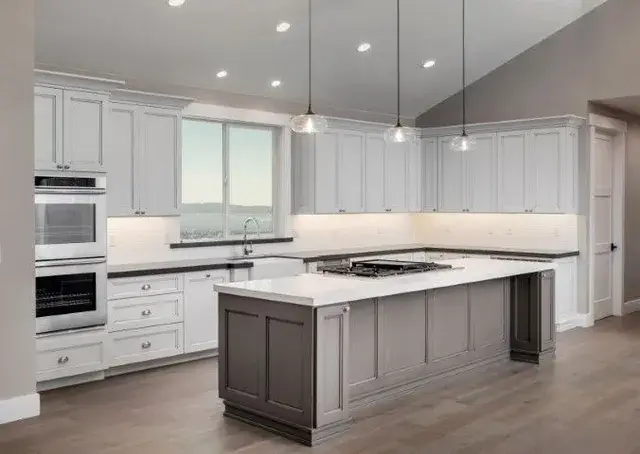
A kitchen’s cabinetry defines its rhythm — how it feels to cook, move, and live in the space. The quality of installation dictates how that rhythm holds up through daily use, temperature changes, and years of family life.
Experience has shown that the best results come from alignment – not just in walls and screws, but between design intent, materials, and homeowner expectations. Precision and planning turn cabinetry from storage into structure.
If you’re considering a remodel or new kitchen installation, start with a clear conversation about design flow, cabinet types, and layout challenges unique to your space. The right planning today becomes the foundation for a kitchen that remains efficient, elegant and enjoyable well into the future.
Let’s Connect
Let’s Talk About Your Encinitas Kitchen Remodel?
Planning a kitchen update can feel exciting and overwhelming at the same time. Whether you are considering a full remodel or just a few upgrades, this page helps you explore your options and take the next step with more clarity. Reach out today to start moving toward a kitchen that feels beautiful, functional, and better suited to everyday meals, gatherings and family time.
Company Info
Encinitas Kitchen Remodel Pro
Modern Design | Trusted Resources
📞 (760) 840-2530
📍Service Areas: Encinitas, CA 92024 | Cardiff by the Sea | Leucadia | Olivenhain