
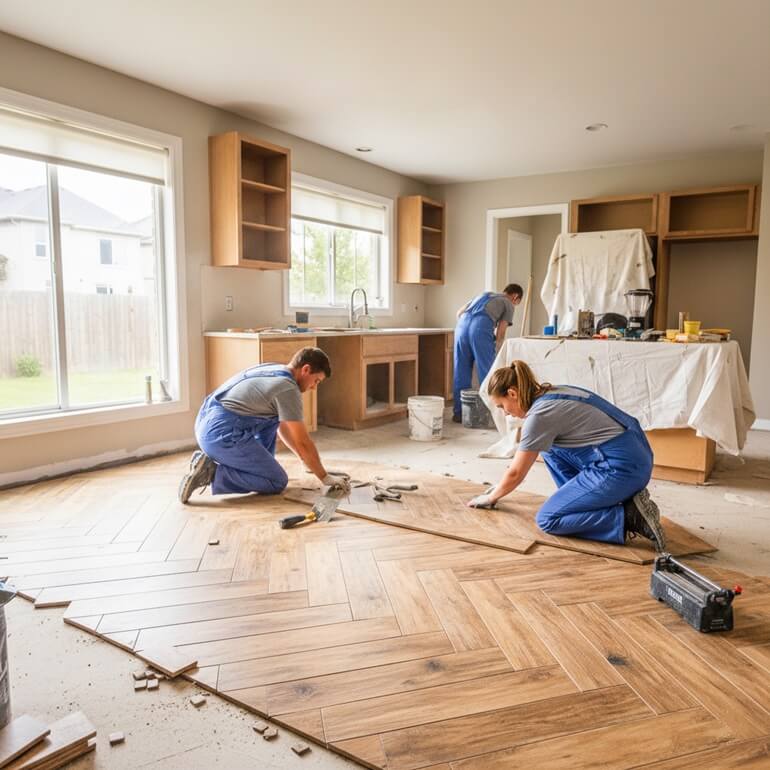
When homeowners begin planning a remodel, the flooring in your kitchen plays a pivotal role in both its aesthetics and functionality. The experience of the Encinitas kitchen flooring installation service team, they understand the importance of selecting the correct flooring can set the tone for the entire space
GET IN TOUCH
💬 Connect with a remodel expert in seconds!
Flooring is not just a surface to walk on – it impacts safety, and determines how well the kitchen stands up to spills, heavy foot traffic, and the coastal climate unique in this region.
Kitchen floors are exposed to constant wear and tear, which makes it crucial to invest in durable, high-quality flooring options. Beyond durability, flooring can enhance the atmosphere of your kitchen, whether your style leans rustic and warming or modern and refined, we’ve got you covered.
Moreover, flooring selection goes beyond just looks – it affects how easy your kitchen is to maintain, its comfort, and how well it will withstand the rigors of everyday life. For clients in Encinitas, CA a kitchen flooring installation service that combines precision and expertise ensuring the perfect balance of style, functionality and durability.
Why Are Right Flooring Important in Kitchen Design?
The kitchen floor absorbs more daily stress than any other surface in the home – heat from appliances, constant foot traffic, spills, dropped cookware, and frequent cleaning.
Our team has seen flooring choices directly impact not only appearance, but long-term performance and homeowner satisfaction.
Right kitchen flooring must balance slip resistance, moisture tolerance, and structural stability. Materials that look appealing but lack proper water resistance often lead to swelling, grout failure, or uneven surfaces within a few years.
Homeowners commonly regret flooring that stains easily, amplifies noise, or becomes slippery near sinks and prep zones – issues that are preventable with informed planning.
Flooring also defines workflow. Proper thickness alignment with adjacent rooms prevents tripping hazards, while thermal comfort underfoot improves usability in high-use kitchens. In open-concept layouts, flooring must visually anchor cabinetry while transitioning seamlessly into living spaces.
Well-selected kitchen flooring supports durability, safety, and resale value – not just style. When flooring decisions are guided by real installation experience and daily-use realities, kitchens remain functional, resilient, and visually cohesive.

Understanding Different Kitchen Flooring Options
When it comes to selecting the suitable flooring for your kitchen remodel, there are various options, each offering distinct advantages and challenges.
With hands-on experience in kitchen flooring installation, our team helps guide homeowners through these choices, ensuring they select a material that aligns with their aesthetic preferences, lifestyle and the unique needs of their space. Below are some popular flooring options available, along with insights on their benefits, challenges, and best uses.
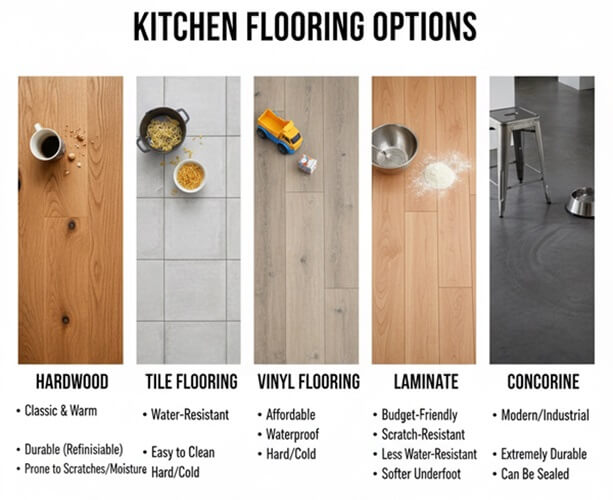
1. Hardwood Flooring
Hardwood is a classic flooring option that deliver warmth and natural beauty to kitchen. Known for its timeless appeal, it suits a broad range of kitchen styles, starting traditional to modern farmhouse. When installed correctly, hardwood can last for decades, making it a long-term investment in your kitchen remodel.
Benefits:
- Durability: High-quality hardwood can resist the test of time, especially when fairly maintained.
- Aesthetic Appeal: Hardwood adds elegance and richness, with natural grains and unique textures that make each piece distinctive.
- Resale Value: Homes with hardwood floors generally have a higher resale value, making it a great option for long-term investment.
Challenges:
- Vulnerability to Moisture: In the kitchen, spills and humidity can affect hardwood flooring, leading to warping or discoloration if not properly sealed.
- Maintenance: Hardwood demands constant cleaning and occasional refinishing to maintain its appearance. Scratches from high heels or dropped objects are also common concerns.
Best for:
Homeowners seeking a timeless, traditional look, or those with kitchens that don’t face excessive moisture exposure.
2. Tile Flooring
Tile is a go-to choice for many kitchen remodels, particularly for its practical benefits. Offered in a diverse range of materials – such as porcelain, ceramic and natural stone – tile provides greater flexibility in regarding design, style and functionality. It’s also incredibly durable, making it an ideal option for high-traffic kitchens.
Benefits:
- Water Resistance: Tile is naturally water-resistant, making it one of the best choices for kitchens where spills are frequent.
- Easy to Clean: Tiles are easy to wipe down, and grout can be sealed to prevent dirt and grime buildup.
- Customizable Designs: With endless colors, shapes, and patterns, tile allows clients to get creative and craft a unique kitchen design.
Challenges:
- Cold Underfoot: Tile can feel chilly on bare feet, may be less suitable for those who spend extended hours in the kitchen.
- Grout Maintenance: While tiles themselves are low-maintenance, grout lines require cleaning and occasional resealing to avoid discoloration and staining.
Best for:
Homeowners looking for a durable, easy-to-maintain flooring option that fits a variety of design styles, particularly modern, Mediterranean, or industrial kitchens.
3. Vinyl Flooring
Its affordability and versatility over the years has driven its growing popularity. Available in sheets, planks or tiles, designed to emulate the aesthetic of luxury materials at a fraction of the cost, like hardwood or stone. Vinyl is a smart choice for homeowners seeking a stylish, cost-effective solution without sacrificing durability.
Benefits:
- Affordable: Vinyl is one of the more budget-friendly nature flooring options available.
- Durable: Modern vinyl flooring is designed to withstand dents scratches and spills, making it great for high-traffic areas.
- Easy Installation: Vinyl is relatively easy to install, especially in plank or tile form, and can often be installed over existing floors with minimal prep work.
Challenges:
- Less Luxury Appeal: While vinyl can mimic the look of hardwood or stone, it doesn’t carry similar prestige or luxury feel.
- Vulnerability to Sunlight: Direct sunlight over long periods can impact vinyl flooring to fade or discolor.
Best for:
Budget-conscious clients who want a durable, low-maintenance option that still looks great, particularly for contemporary or minimalist kitchen designs.
4. Laminate Flooring
Laminate is a popular option and ideal for clients desiring the elegance of hardwood or stone without the associated expense. Laminate Built with a high-density fiberboard core and a realistic photographic finish resembling natural wood or tile.
Benefits:
- Scratch and Fade Resistant: Laminate flooring is highly resistant to scratches and fading, A practical option for busy families with children or pets.
- Affordable: Laminate provides the aesthetic of high-end materials at an affordable price.
- Easy Installation: Laminate floors are commonly designed with a click-lock mechanism for easy installation, making it a convenient DIY option.
Challenges:
- Moisture Sensitivity: While laminate is durable, prolonged exposure to moisture can cause it to warp or swell, making it less suitable for kitchens prone to continuous water spills.
- Lacks the Real Feel of Wood or Stone: While it looks great, laminate doesn’t feel as luxurious or solid as hardwood or stone flooring.
Best for:
Clients seeking an affordable, durable and easy-to-maintain flooring option for a modern kitchen design, especially those looking to a tight budget.
5. Concrete Flooring
Is often seen in industrial or modern kitchens due to its sleek, minimalist aesthetic and extreme durability. Polished or stained Concrete can be tailored with a wide range of finishes, textures, and colors, making it an excellent choice for a contemporary or urban kitchen design.
Benefits:
- Extremely Durable: Concrete is incredibly hard-wearing, built to resist years of heavy foot traffic.
- Customization: Concrete can be stained, polished, or etched to create unique patterns and colors, allowing clients to get creative with their kitchen design.
- Low Maintenance: Once sealed, concrete is easy to clean and doesn’t require the upkeep that materials like hardwood or tile demand.
Challenges:
- Cold and Hard Underfoot: Concrete may cause discomfort when standing for long periods, and it’s prone to cracks if not properly maintained.
- Professional Installation Required: Concrete floors require skilled installation and finishing, Potentially adding to the overall expense of the project.
Best for:
Clients who are remodeling their kitchen with a modern, industrial aesthetic in mind and who are looking for a high-end, durable flooring option.
Final Insight: Flooring choices often come down to balancing coastal humidity and lifestyle, due to region needs. Tile and luxury vinyl plank are frequently selected for their moisture resistance and easy upkeep, while hardwood remains popular among homeowners who prioritize warmth and character despite the maintenance.
Key Considerations for Choosing the Right Flooring for Kitchen
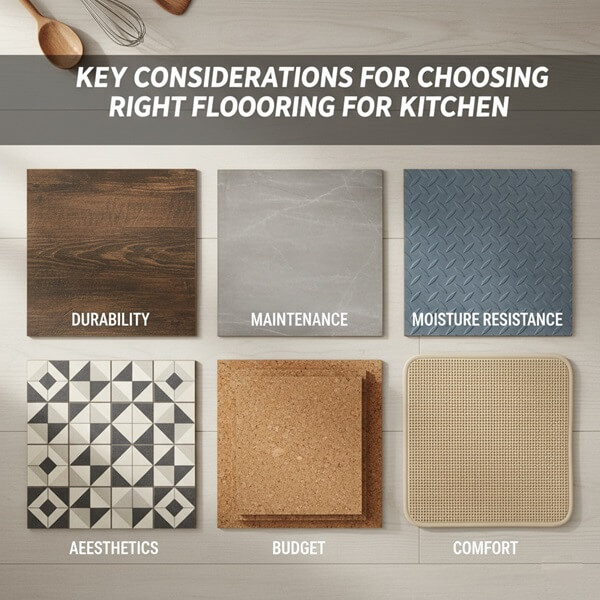
Selecting kitchen flooring is not just about style – it’s about making informed decision that will hold up to daily life, coastal conditions and long-term use.
Over long experience, team has seen how the right considerations upfront prevent costly replacements or frustrations later.
The kitchen is one of the most high-traffic areas of a home, with frequent foot traffic, cooking spills, and the potential for heavy objects to fall on the floor.
Therefore, durability must remain a key consideration when choosing flooring for your kitchen.
What to look for:
- Choose materials like ceramic tile, porcelain, or vinyl that are specifically designed to handle heavy use without showing signs of wear.
- For high-traffic kitchens, hardwood may require extra care, such as a tough finish, to protect against scratches and dents.
- Opt for thicker, more durable materials for families with kids or pets, where floors are subjected to frequent activity.
Durability ensures that your kitchen flooring will not only withstand the demands of daily life but also maintain its appearance for years, making it a worthwhile investment in the long term.
Each flooring material demands different levels of maintenance, and kitchen floors are exposed to many elements – spills, grease, food crumbs, and more.
If you want to maintain a clean and aesthetically pleasing kitchen, you’ll need a floor that is easy to care for and doesn’t require constant upkeep.
What to look for:
- Easy-to-Clean Options: Vinyl and tile flooring are excellent choices, as they are simple to wipe down and keep free from stains.
- Grout Considerations: If choosing tile, opt for grout that’s easy to clean and reseal to avoid discoloration and grime buildup.
- Sealing Needs: Hardwood floors may need to be sealed regularly to prevent moisture penetration and protect from stains. Laminate floors, while easier to maintain, cannot be refinished if scratched.
A flooring option that aligns with your cleaning habits will save you time and energy.
For those seeking low-maintenance solutions, tile and vinyl is an excellent choices.
The kitchen is a space with frequent exposure to moisture, whether it’s from cooking, spills or humidity.
Therefore, choosing flooring that resists moisture is critical to avoid issues like warping, mold, and deterioration.
What to look for:
- Waterproof Materials: Tile, vinyl and concrete are some of the best moisture-resistant options, ensuring that your floors won’t be damaged by accidental spills or humidity.
- Wood Alternatives: If you prefer the look of hardwood, but worry about moisture damage, consider moisture-resistant engineered hardwood or waterproof laminate options.
- Proper Sealing: If choosing hardwood or laminate, ensure the floors are sealed properly to protect them from water damage over time.
Selecting a moisture-resistant floor is crucial in maintaining a dry, clean and long-lasting kitchen, especially if your kitchen sees a lot of cooking or spill-prone activities.
The final flooring you choose will have a significant impact on the overall aesthetic of your kitchen.
Whether you’re looking for something traditional, contemporary or somewhere in between, the right flooring choice can complement your design vision and elevate the space’s style.
What to look for:
- Material Variety: Select a material that align your kitchen’s design. For instance, hardwood floors work well with a traditional or farmhouse-style kitchen, while sleek tile or polished concrete is ideal for a modern or minimalist look.
- Color and Pattern: Choose flooring that complements the color palette of the kitchen. Darker floors add elegance and warmth, while soft, light colors enhance the sense of open space and make rooms feel more spacious. Tiles and vinyl come in various patterns, that you can pick from, allowing for added creativity.
- Coordinating with Fixtures: Think about how your new flooring will interact with your cabinets, countertops and appliances. The goal is for the flooring to complement the overall kitchen design rather than clash with it.
The kitchen floor can be a statement piece or a subtle backdrop, but it should always enhance the space’s overall design. Coordinate flooring choices with the design of your cabinets, countertops and walls to ensure the flooring complements those elements.
Kitchen flooring is an investment that can significantly impact your remodel budget.
It’s important to balance your desired aesthetics and functionality with the overall cost of the material, installation and maintenance.
What to look for:
- Material Costs: Hardwood and natural stone are typically premium-priced, while vinyl and laminate offer more affordable alternatives without compromising on style.
- Installation Costs: Some materials, like Hardwood, require professional installation and more complex techniques, which can increase the cost.
- Long-Term Investment: Take the expected lifespan of the material into account when budgeting. While more expensive options may have higher upfront costs, they can offer greater durability and longer-lasting value, which could save money in the long term.
Choosing flooring that fits your budget, doesn’t mean you are forced to overlook aesthetics or durability. With the right materials and professional installation, you can find a solution that delivers both beauty and function within your desired price range.
While durability, aesthetics and maintenance are essential, comfort is another key factor to consider, especially since the kitchen is a space where you may stand for extended periods.
A comfortable floor can make cooking and other kitchen tasks more enjoyable.
What to look for:
- Softness Underfoot: Cork and rubber are softer flooring options that provide more cushioning, making them ideal for kitchens where you spend a lot of time standing.
- Temperature Control: Concrete as example, can make you feel cold underfoot, which may not be ideal for all homeowners. Adding radiant heating systems under these floors can increase comfort, but it also adds to the cost.
- Flooring Thickness: Thicker materials like plush carpets (though less common in kitchens) or cushioned vinyl provide more comfort when standing.
Comfort can be considered, especially for homeowners who spend long hours in the kitchen with bare legs. Opt for materials that balance both aesthetic appeal and a comfortable underfoot experience.
Final Insight: Many homeowners initially focus on aesthetics, but the most successful projects balance beauty with practicality. By considering durability, maintenance, and moisture resistance alongside style and budget, flooring becomes a long-term asset rather than a short-term design choice.
Our team can help lead you in selecting the best flooring that match with your vision, needs and lifestyle. The right floor will not only enhance the beauty of your kitchen but also ensure it remains functional and comfortable.
Encinitas Kitchen Flooring Installation Service Step-by-Step
Installing new flooring in your kitchen is an exciting part of any remodel. However, it’s not just about selecting the suitable material – it’s about ensuring a seamless, professional installation that will guarantee long-lasting durability and a right finishing.
Our bring long of hands-on expertise to every project, ensuring that each installation is done with precision, care, and attention. The following step-by-step process to make sure your kitchen flooring is installed to the proper standards.
1. Initial Consultation and Assessment
The first stage in the flooring installation journey begins with a detailed consultation. We begin by understanding your vision for the kitchen remodel, the style of flooring you’re interested in, and any practical requirements, such as durability, moisture resistance, and ease of maintenance.
This consultation helps our team guide you in choosing the best flooring material suited to your specific needs.
What happens during this stage:
- Design Preferences: Discuss your design preferences, including color, pattern and texture, ensuring the flooring complements the overall kitchen aesthetic.
- Assessment of Existing Floor: We evaluate the current state of your kitchen floor condition. This is required, for ensuring that the new flooring has a stable foundation.
- Expert Recommendations: Depends on your needs and preferences, we provide professional recommendations to help you choose the best material, style and budget for your kitchen.
A thorough consultation sets the stage for a smooth installation, ensuring that we fully understand your requirements before moving forward.
2. Site Preparation
Once you have selected your flooring material and agreed on the installation plan, the site preparation stage begins. This step is critical because it ensures that the floor is installed on a stable, level surface, which is key to the longevity and functionality of the flooring.
What happens during this stage:
- Removal of Old Flooring: If your kitchen has existing flooring, we carefully remove it to expose the subfloor. This can involve removing tile, vinyl or even hardwood, depending on the current flooring.
- Subfloor Inspection: After removing the old flooring, the subfloor is carefully inspected for moisture, damage and unevenness. Any issues should be corrected prior to continuing the process.
- Leveling the Subfloor: If necessary, we level the subfloor to ensure a perfectly flat, even surface. Uneven subfloors can cause issues like creaking, gaps or buckling in the finalized floor. In some cases, we apply a leveling compound to make sure the surface is smooth.
Proper site preparation is essential for ensuring that your new kitchen flooring lasts for years and remains in optimal condition. By taking extra care in this phase, we prevent future issues and guarantee the floor’s durability.
3. Precise Installation
With the site properly prepared, the next phase is the flooring installation itself. Our experienced installers executing a precise, seamless installation that make sure every piece fits perfectly. The installation process varies depending on the material you have chosen, but we follow the same meticulous standards for every type of flooring.
What happens during this stage:
- For Hardwood Flooring:
- Each plank is carefully laid with precision, ensuring that the pattern and direction are consistent throughout the kitchen.
- We use the best methods to secure the planks and ensure that they’re properly aligned. In some cases, a protective finish is applied to protect the wood from stains, moisture and damage.
- For Tile Flooring:
- We use a wet saw for precise cuts and ensure each tile is laid straight, with clean lines and an even surface.
- Grout is applied carefully between tiles, ensuring it is smooth and level, with no visible gaps or inconsistencies.
- For Vinyl or Laminate Flooring:
- These materials often use click-lock systems or are installed as floating floors, making them quicker to install.
- We make sure to align the edges securely and avoid any gaps or seams that could affect the appearance or performance of the flooring.
- For Concrete Flooring:
- For polished or stained concrete, specialized equipment use to prepare, stain and polish the surface to the desired finish.
- This requires expertise to achieve a smooth, shiny finish that adds to the modern look of the kitchen.
Each material request its own set of skills and expertise, and the team is trained to handle each installation process. The output is a floor that combines elegance with lasting durability.
4. Finishing Touches
The final phase in the flooring installation service is applying the finishing touches to ensure the flooring is complete and visually cohesive. These details help to enhance the overall appearance of your kitchen and give it a polished, professional look.
What happens during this stage:
- Baseboards and Trim:
- Install baseboards or trim around the edges of the room to cover the expansion gaps between the flooring and the walls. This ensures a clean, finished look while allowing the floor to expand and contract naturally with temperature and humidity changes.
- Final Inspection and Clean-up:
- After installation is finished, we carry out a detailed final assessment, to ensure the installation meets high standards.
- Team cleans the area, and removes any leftover debris.
The finishing touches may seem small, but they transform the overall design and practical performance of your new kitchen floor. These final steps ensure that the installation looks as good as it performs.
Common Customer Challenges and How We Address Them
Over the long period, our team has gained deep insights into the unique challenges that kitchen flooring installation clients often face. Every remodeling project is different, and while each client has their own vision and needs, certain common issues tend to arise during the flooring installation process.
By anticipating these pain points and applying proven solutions, we ensure each installation delivers lasting results.
1. Dealing with Uneven Subfloors
The Challenge:
Many older homes, particularly those built before modern construction practices were standardized, could have uneven or damaged subfloors. This can be a significant issue for homeowners looking to install new flooring, as an uneven surface can lead to improper floor installation, causing issues like creaking, buckling or gaps between flooring planks or tiles.
Our Solution:
- Thorough Inspection: Begin every flooring installation by performing a comprehensive inspection of the subfloor. This includes checking for damage, moisture and unevenness. To carefully assess the condition of the subfloor to determine the best course of action before proceeding with the installation.
- Leveling the Subfloor: If the subfloor is uneven, Shall use specialized tools and techniques to level it. Whether it’s using a leveling compound to smooth out the surface or replacing damaged sections, ensure that the subfloor is stable and uniform, providing the perfect foundation for your new flooring.
- Preventing Future Issues: By addressing the subfloor issues upfront, we prevent future problems that can arise from an improperly prepared surface. This proactive approach helps your new kitchen floor stay stable and durable for years to come.
2. Time Sensitivity in Kitchen Remodels
The Challenge:
Kitchen remodels are often time-sensitive projects, especially when homeowners are living in the space or need the kitchen for day-to-day activities. Clients frequently express concerns about the length of the installation process and the impact it may have on their daily routines.
Our Solution:
- Efficient Scheduling: We understand the importance of minimizing disruption during a kitchen remodel. The team works closely with homeowners to set realistic timelines and deliver efficient installation services. We strive to complete the flooring installation as quickly as possible without compromising quality.
- Dedicated Crew: Assign a skilled and experienced crew to project, ensuring that the work progresses smoothly and efficiently. The team are trained to handle tasks promptly and professionally, that helps to stay on schedule.
- Clear Communication: Throughout the process, maintaining open communication with homeowners, providing updates and addressing concerns that effect timeline. The goal is to ensure that the project stays on track.
3. Choosing the Right Flooring for High-Traffic Places
The Challenge:
Many of clients have young children, pets or busy households, which means their kitchen floors endure constant wear and tear. One of the most common concerns is selecting a flooring material that can withstand high foot traffic, spills and general use without showing signs of damage too quickly.
Our Solution:
- Durability Consultation: During initial consultation, we discuss the daily demands the flooring will face. The team helps homeowners choose the suitable material based on factors such as foot traffic, pet activity and spill-prone areas.
- Recommended Materials: For high-traffic kitchens, we recommend materials like ceramic tile, porcelain and vinyl, which are both durable and easy to clean. We also suggest laminate or engineered hardwood for people seeking the look of wood with additional durability.
- Customizing for Families: For families with children or pets, we provide additional recommendations, such as scratch-resistant finishes or adding extra layers of protection to hardwood floors. We also advise on choosing flooring that can be easily maintained, reducing the effort required to keep the floor looking new.
4. Flooring Installation with Minimal Disruption
The Challenge:
Many homeowners are concerned about the disruption that comes with flooring installation, especially when involves extensive prep work, removal of old flooring, and the actual installation process. Homeowners are often worried about the mess, and inconvenience caused during the project.
Our Solution:
- Clean and Professional Work Environment: We realize the significance of maintaining a neat and organized work site. The team takes steps to minimize dust and debris by covering surrounding furniture, countertops with protective sheeting, if necessary. Make sure the work space remain tidy and organized.
- Timely Completion: Our crew works efficiently to complete the installation without unnecessary delays, ensuring minimal disruption to your daily routine.
- Post-Installation Clean-Up: Once the flooring installation is complete, we conduct a cleaning to remove any leftover dust, debris, or packaging materials. We leave your kitchen with no mess or inconvenience.
5. Navigating Design and Material Choices
The Challenge:
With wide variety of flooring materials, choosing the right one for a specific design style can be overwhelming. Homeowners often struggle with selecting a material that fits their kitchen’s aesthetic while also meeting practical requirements such as durability, moisture resistance, and ease of maintenance.
Our Solution:
- Personalized Design Advice: We take the time to understand your kitchen design goals, color palette and overall vision. The team provides personalized recommendations on flooring materials that will complement your kitchen’s style, whether it’s modern, traditional, or in between.
- Material Education: Educate homeowners on the advantages and limitations of different materials, providing clear explanations of how each type of flooring will perform in the kitchen. This includes details on maintenance requirements, expected lifespan, and how the material will tolerance to daily wear.
Transform Your Kitchen with Expert Flooring Solutions
The right kitchen flooring complete the look of your space, and plays a vital role in creating a functional and welcoming environment for your family. We realize that each kitchen is unique, and flooring choices should reflect the style preferences and also practical needs. Each design enhance the overall appeal and functionality of your kitchen.
Transforming your kitchen with the perfect floor include careful consideration of many factors. From aesthetics to durability, and the team ensures each element aligns with your vision, helping you navigate through the many options available and guiding you towards a choice that not only looks beautiful but last for years.
Below, we explore how the right flooring choice can elevate your kitchen remodel.
1. Enhance the Aesthetic of Your Kitchen
Kitchen flooring is a functional element and an opportunity to enrich your space overall design and atmosphere. Whether your objective for a rustic, modern or classic look, the right flooring can complement the style of your cabinets, countertops and backsplash installation.
How Flooring Impacts Design:
- Warmth and Texture: Hardwood floors add warmth and texture to a kitchen, creating a cozy and inviting atmosphere. It’s a perfect choice for traditional, farmhouse or rustic kitchen designs.
- Sleek and Modern: Tile, porcelain and concrete offer a sleek, contemporary design that blends perfectly with minimalist or industrial kitchen designs. The defined lines and polished finishes create a sophisticated, modern feel.
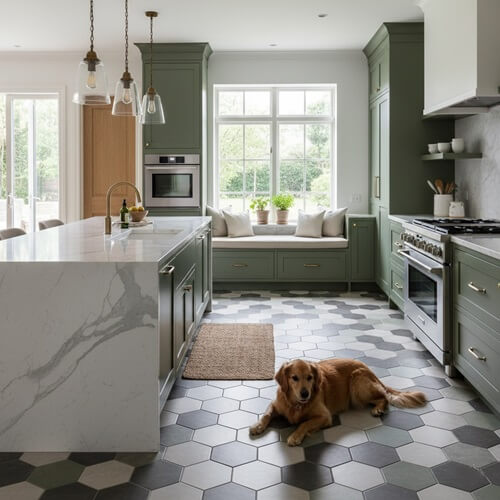
- Creative Patterns and Colors: Tile floors allow for creativity in patterns, colors and designs. Whether you’re looking for a classic checkerboard pattern or a bold geometric design, tile offers endless possibilities to bring your vision to life.
By selecting the right material and finish, the flooring in your kitchen can transform the space into something that feels both cohesive and stylish. Team helps guide you in choosing the best flooring option that enhances your design aesthetic while making the most of your kitchen layout.
2. Durability for Long-Term Performance
Kitchens are high-traffic areas where floors are subjected to daily wear and tear. From dropped kitchen tools to food spills, your kitchen floor must be able to handle all of these challenges. Choosing durable flooring that can withstand the daily grind is crucial for long-term satisfaction.
Durable Flooring Options:
- Hardwood Flooring: While it offers beauty and warmth, hardwood is also highly durable when properly cared for. The team applies the right protective finishes to safeguard your wood floors against spills and wear.
- Tile Flooring: Tile is one of the more robust flooring options available. It withstand scratches, stains and moisture, convert it to become perfect fit for high-traffic kitchens.
- Vinyl and Laminate Flooring: Both are highly durable and designed to resist damage from moisture, heavy foot traffic, and daily activities. These options are particularly useful in homes with pets or young children.
Our flooring options are selected with durability in mind, ensuring your kitchen floor will look pristine for coming years, even under heavy use.
3. Functionality for Everyday Use
Beyond looks, functionality is important in each kitchen remodel. You need flooring to support your daily activities, from cleaning and cooking to hosting visitors. The flooring you choose should provide comfort, be easy to clean, and stand up to the demands of a busy kitchen.
How Flooring Adds Functionality:
- Water and Stain Resistance: Kitchens are prone to spills, so, choosing a flooring material that can be easy to clean is important. Waterproof options like tile, vinyl and concrete are durable and also, provide excellent resistance to moisture.
- Slip Resistance: Safety is a priority in the kitchen. Slip-resistant flooring, such as textured tiles or rubber, helps prevent accidents, particularly in spaces prone to wetness or grease.
- Ease of Maintenance: Materials like vinyl and laminate require minimal maintenance, making them an excellent choice for busy homeowners who want a floor that’s easy to maintain in short time without compromising on style.
We ensure your kitchen flooring installation is practical, not just beautiful, providing a surface that suits your lifestyle and daily kitchen needs.
4. Maximizing Your Space
The flooring you choose can also have an impact on the perceived size of your kitchen. Suitable flooring can make a small space feel more open and airy or give a spacious kitchen a more intimate, cozy feel.
How Flooring Can Influence Space Perception:
- Light and Bright: Lighter colors, such as beige, light gray, or white, can make a smaller kitchen appear larger and brighter. Glossy or reflective tiles, such as marble or polished porcelain, can also amplify natural light, creating a sense of openness.
- Dark and Cozy: Darker flooring colors like walnut or slate create warmth and intimacy, making large kitchens feel cozier and more inviting. These colors act particularly fine in kitchens with ample natural light or open-plan designs.
- Pattern and Layout: Pattern and layout of the flooring also impact how the space is perceived. Diagonal or herringbone patterns can create a sense of movement and depth in the room, while straight-lay patterns may make the space appear larger and more uniform.
By carefully selecting the suitable flooring material and design, we can help maximize the potential of your kitchen space, ensuring it feels functional and welcoming.
5. Cost-Effective Flooring Solutions
While the quality of your kitchen flooring is paramount, we understand that budget is always a consideration. There is a range of flooring options that can meet various price points, ensuring that you get the best value for your investment without compromising on style or performance.
Budget-Friendly Options:
- Vinyl and Laminate Flooring: These materials offer excellent durability and a wide range of styles at a fraction of the cost of hardwood or natural stone. They are ideal for homeowners on a budget who want to get the upscale aesthetic you deserve, while keeping your spending smart.
- Ceramic and Porcelain Tile: Tile is another affordable option, especially when opting for high-quality ceramic or porcelain tiles. These materials can simulate the look of expensive stone or wood at a lowest cost.
We work with you to identify the best flooring material for your budget while ensuring that you don’t have to compromise on quality or long-term value.
Benefits of Professional Encinitas Kitchen Flooring Installation
When planning to set up new flooring in your kitchen, the essential of hiring professionals cannot be overstated. While DIY options may seem tempting, the complexities of kitchen flooring installation require expert skills, knowledge, and attention to detail to ensure the best possible results.
We bring long experience to every project, offering several key benefits that make professional installation the right choice for homeowners looking to remodel or upgrade their kitchen floors.
1. Expertise and Precision
One of the main advantages of hiring professionals for your kitchen flooring installation is the level of expertise and precision they bring to the project. Installation in new floors requires more skill and preparation than simply arranging planks or tiles. It requires careful measurement, specialized tools, and technical know-how to ensure that everything is installed properly.
Why Expertise Matters:
- Accurate Measurements: Precise measurements are essential for ensuring that the flooring fits perfectly in your kitchen. The team has the tools and expertise to measure every angle and corner of your space, ensuring that the floor fits flawlessly, without awkward gaps or uneven lines.
- Proper Material Handling: Certain materials, such as hardwood or tile, need specific installation techniques. Professional installers are skilled in managing these materials correctly to bypass damage and ensure longevity.
- Seamless Finish: Professionals know how to make clean cuts, align seams, and apply grout or finish correctly, which results in a polished, seamless look that enhances the overall appearance of your kitchen.
2. Time-Saving and Efficiency
Installing kitchen flooring can be time-consuming, mostly for homeowners with no experience. Professional installation services are designed to deliver the work efficiently, saving efforts and time for you.
How Professional Installers Save You Time:
- Experienced Team: The team skills and equipment to complete the installation quickly without cutting corners. Work effectively and stay on schedule, so your kitchen floor is ready sooner rather than later.
- Avoiding Delays: While DIY projects can often run into delays, professional installers understand precisely what actions are necessary and can avoid common mistakes that waste time, with no unnecessary setbacks.
- Reduced Stress: Handling installation on your own can be overwhelming, but by hiring professionals, you free up your time and reduce stress. The team takes care of the entire process—from material to installation—allowing you to focus on other aspects of selection, and approval of the remodel design.
3. Access to Quality Materials
A critical factor in any flooring installation is the quality of the materials used. While DIY people may be limited to what’s available in local hardware stores, professional flooring installers have access to a wider range of high-quality materials that can enhance the overall durability and appearance of your kitchen.
The Advantages of Quality Materials:
- Durability: Professional installers work with trusted suppliers and have access to durable, high-end materials that last longer and are more resistant to wear and tear. We can help you in choosing materials that suit the design and your functional needs.
- Variety of Options: We offer a wide selection of flooring materials, from classic hardwood and tile to modern vinyl and engineered materials, ensuring that you have the best options to choose from for your kitchen remodel.
- Sourcing and Pricing: Professionals often have relationships with suppliers, which may allow us to offer you better pricing on high-quality materials that may be out of reach at your local retail stores.
4. Ensuring Proper Subfloor Preparation
One crucial element, yet often overlooked, ensuring that the subfloor is properly setup. Uneven subfloor or a damaged can drive to a host of issues such as uneven floors, squeaks or premature wear. Professional installers pay attention to details, ensuring the subfloor is in optimal condition before installation begins.
The Importance of Subfloor Preparation:
- Inspection and Repair: We thoroughly inspect the subfloor for any damage, moisture, or uneven areas that could cause issues with your new flooring. If necessary, the team repair or change the subfloor to create a stable and smooth surface for installation.
- Moisture Control: Kitchens are high-moisture areas, so ensuring that the subfloor is properly sealed and protected is essential to avoid future water damage or mold growth. Applying moisture-resistant barriers when necessary, especially for flooring materials like hardwood that are susceptible to water damage.
- Leveling the Surface: For floors that may be slightly uneven, using leveling compounds ensure that the surface is perfectly even, creating a strong foundation for the new flooring to rest on.
5. Long-Term Cost Savings
Although professional flooring installation is considered a larger upfront investment, it can save your money in the long run by preventing costly mistakes and extending the life of your flooring.
How Professional Installation Saves You Money:
- Avoiding Costly Errors: DIY flooring installations often result in mistakes that can be expensive to fix. Like, incorrect installation techniques can lead to warped boards, broken tiles, or other issues that may require expensive repairs or replacements.
- Longer Lifespan: With professional installation, you’re ensuring that your flooring is installed to the highest standard, which means it will last longer without needing repairs. This minimize the overall maintaining cost of your kitchen floor over time. This minimize the overall maintenance cost of your kitchen floor over time.
Planning Your Kitchen Flooring Project with Confidence
A successful kitchen flooring project is rarely about the material alone. It is the result of thoughtful planning, clear expectations, and execution that respects both the home and the homeowner’s daily routine. This is where expertise are considerable.
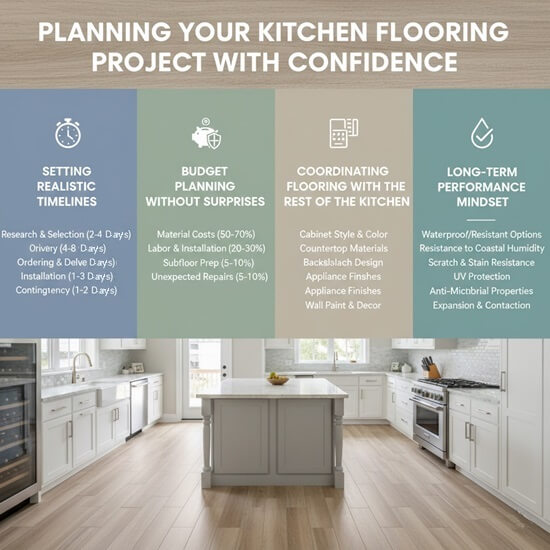
Setting Realistic Timelines
Installation must align with the broader remodeling scope -especially in active homes or phased renovations. Based on past projects, most homeowners benefit from:
- Pre-installation preparation (1–3 days): furniture removal, appliance coordination and floor protection
- Installation window (2–6 days): varies by material, subfloor condition and layout complexity
- Cure and acclimation periods (1–4 days): critical for wood, engineered products and certain adhesives
Clear scheduling upfront prevents rushed decisions and avoids conflicts with cabinet, countertop, or appliance installations.
Budget Planning Without Surprises
Flooring costs extend beyond visible materials. A well-planned budget accounts for:
- Subfloor repairs or leveling
- Moisture mitigation when required
- Trim, transitions, and threshold details
- Waste factors for cuts, patterns, and future repairs
Homeowners who plan with these elements in mind tend to avoid mid-project changes that can compromise quality or timelines.
Coordinating Flooring with the Rest of the Kitchen
Kitchen flooring should work in harmony with:
- Cabinet toe-kicks and heights.
- Island layouts and seating zones.
- Appliance clearances and ventilation requirements.
- Adjacent rooms and flooring transitions.
Early coordination ensures visual continuity and functional accuracy, especially in open-concept homes.
Long-Term Performance Mindset
The most successful projects prioritize how the floor will perform years after installation:
- Ease of maintenance for busy households.
- Resistance to coastal humidity and temperature shifts.
- Repairability and replacement options if damage occurs
Flooring decisions made with long-term use in mind consistently deliver higher satisfaction than trend-driven choices alone.
A Reliable Foundation for Your Kitchen Remodel
Kitchen flooring is not a standalone upgrade-it is the surface that supports every other decision in the kitchen. Cabinets, appliances, lighting, and daily movement all rely on the flooring being installed correctly, precisely, and with foresight. When this foundation is handled properly, the entire kitchen functions better and feels complete.
Flooring as a Long-Term Efficient
Homeowners often evaluate flooring by appearance first, but long-term value comes from:
- Structural integrity that prevents movement, cracking, or separation.
- Compatibility with future upgrades, such as cabinet replacements or appliance changes.
- Consistent performance under daily cooking, cleaning, and family use.
Well-installed kitchen flooring continues to perform quietly in the background, without requiring constant attention or corrective work.
Local Knowledge Makes a Difference
Homes here present unique considerations—from coastal humidity to varying slab conditions and older subfloor systems. Familiarity with local construction styles allows flooring decisions to be made with accuracy rather than assumptions. This local awareness helps avoid:
- Incorrect material selection for moisture-prone environments.
- Inadequate expansion allowances.
- Installation methods that fail under real-world conditions.
Details like these are often invisible once the project is complete—but they are exactly what determines durability.
Clear Communication, Better Outcomes
The smoothest projects are those where expectations are clear from the beginning:
- What stays and what gets removed.
- How the installation impacts daily kitchen access.
- What the finished edges, transitions and heights will look like.
When homeowners understand the process and the reasoning behind each step, decisions are easier and results are more predictable.
A Kitchen Floor That Supports the Way You Live
Kitchen flooring is one of the most relied-upon elements in the home, yet its success is often measured by how effortlessly it performs over time. When the right material is selected, installed with precision, and aligned with how the kitchen is truly used, the result feels natural, both visually and functionally.
Attention to subfloor conditions, material behavior, and long-term performance ensures the kitchen floor remains dependable long after the remodel is complete.
For those exploring kitchen flooring options or planning the next phase of a kitchen remodel, having a clear understanding of materials, installation requirements, and real-world performance can make the process far more confident and straightforward. Taking time to review these details early using professional crew, often leads to smoother projects and results that feel intentional rather than rushed.
A well-installed kitchen floor is not just a finishing touch, it is a foundation that supports the kitchen for long-term.
Let’s Connect
Do You Dream of Having the Perfect Kitchen?
Whether you’re planning a full remodel or just a few updates, our team in Encinitas is dedicated to transforming your space into something beautiful and functional. Reach out today – We’d love to transform your kitchen into a space where you can savor every meal and create lasting memories with your loved ones.
Company Info
Encinitas Kitchen Remodel
Modern Design | Trusted Resources
📞 (555) 555-5555
📍Service Areas: Encinitas, CA 92024 | Cardiff by the Sea | Leucadia | Olivenhain